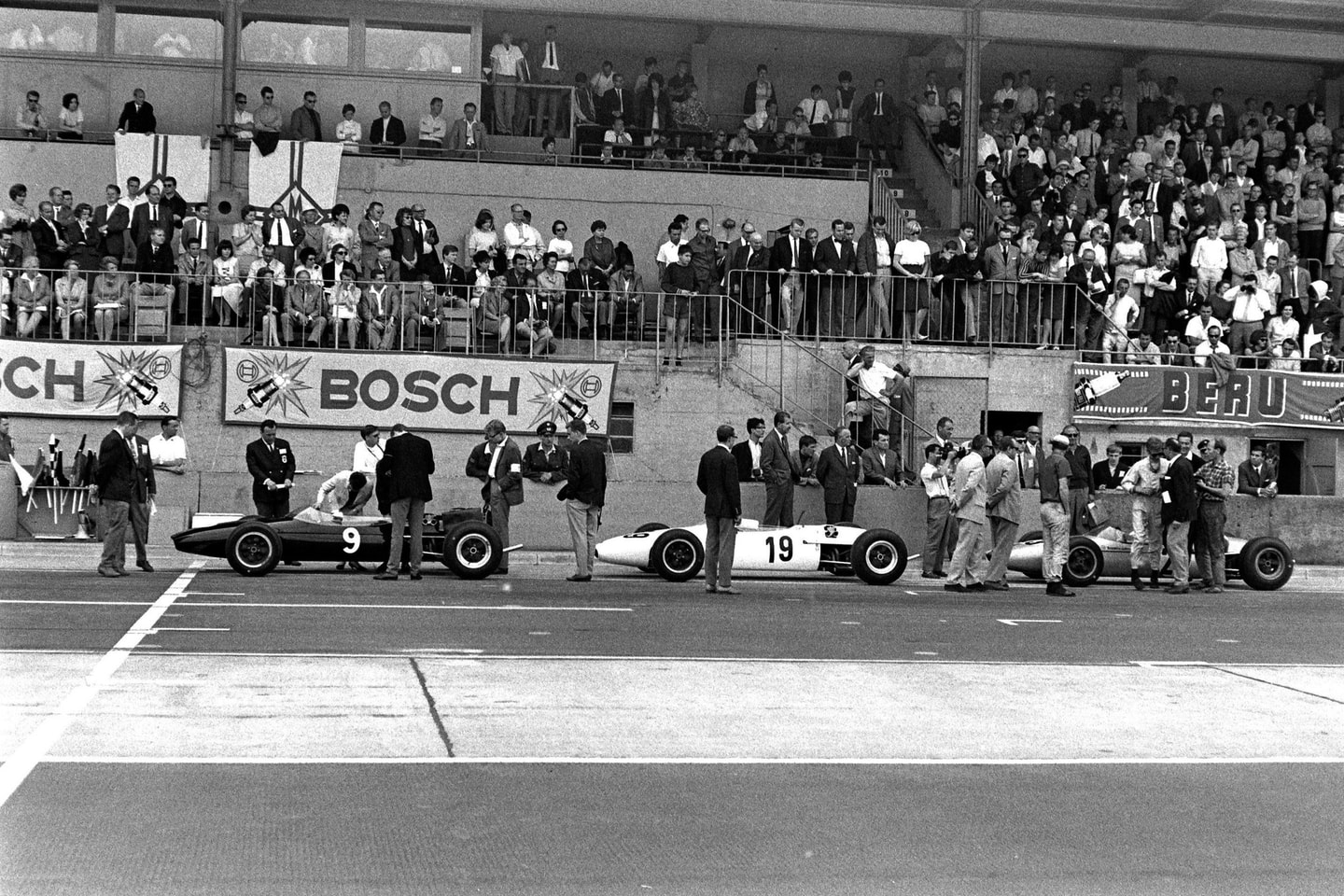
AVUS: A Chronicle of Innovation and Transformation
1921
The Birth of a Legend
Conceived as Germany's first autobahn, AVUS was a daring experiment in high-speed transport. Its unique design—two parallel straights connected by steeply banked curves—captured the imagination of engineers, drivers, and the public alike upon its 1921 opening.
1920s–30s
The Golden Age
AVUS became a crucible for motorsport innovation. Legendary drivers like Caracciola and Rosemeyer pushed the limits of man and machine. Streamlined cars and supercharged engines were refined here, shaping the future of automotive technology.
1930s–40s
Shifting Sands
The rise of the Nazi regime cast a shadow, turning the track into a stage for propaganda. World War II brought racing to a halt, and bombing raids damaged the circuit, mirroring the scars of the city itself.
1950s
Rebirth
Rebuilt as a symbol of Berlin's resilience, racing resumed in the 50s. The infamous 'Wall of Death', a steeply banked north curve, thrilled and terrified drivers and spectators alike.
1960s–90s
Changing Landscape
As technology advanced, AVUS struggled with modern safety standards. The banking was removed and the track shortened. Its original character shifted, reflecting the evolution of motorsport and the emphasis on safety.
1999
The Final Lap
After decades of thrilling races, the final official event was held in 1999. The era of high-speed racing on this iconic track came to an end, leaving behind a rich legacy of innovation, bravery, and unforgettable moments.
2025
A New Chapter
AVUS Tribüne is reborn as a premier event location, breathing new life into this historical landmark. Preserving the spirit of innovation, it is poised to become a stage for visionary gatherings and unforgettable experiences.